Lift CE Certification
Conformity assessment, CE marking and the technical file under Directive 2014/33/EU
Contact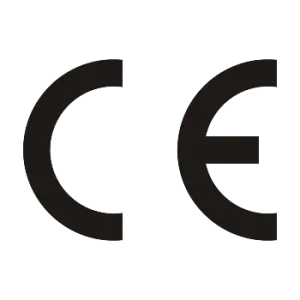
Lift CE certification is the process of demonstrating that a new lift meets the essential health and safety requirements of the Lifts Directive 2014/33/EU, completing the relevant conformity assessment procedure, drawing up the EU declaration of conformity and affixing the CE marking.
CMB Consultancy supports you in choosing the right route for your company and your lift, preparing the technical file and quality system, checking readiness before the assessment and closing nonconformities. The conformity assessment and the certification decision are carried out by a notified body authorised for the relevant scope.
What Does the CE Marking Mean?
The CE marking shows that the lift installer declares the product to comply with the applicable EU harmonisation legislation. The CE marking:
- is not a quality award or a warranty,
- is not just a test report,
- cannot be affixed before the technical file and the conformity assessment are complete,
- does not remove the installer’s legal and technical responsibility.
Because a notified body takes part in the conformity assessment of lifts, its identification number appears next to the CE marking.
Is CE Marking Mandatory for Lifts?
A new lift within the scope of Directive 2014/33/EU must pass the relevant conformity assessment and bear the CE marking before it is placed on the market. The installer is responsible for the design, manufacture, installation and placing on the market of the lift.
Until the CE process is complete:
- the EU declaration of conformity cannot be drawn up,
- the lift cannot be lawfully placed on the market,
- the technical basis required for registration and licensing is not in place.
Conformity assessment before placing on the market, registration and periodic inspection are linked, but they are separate procedures.
CE Modules for Lifts
The main routes for completed lifts are:
Module H1 — Full quality assurance
Module H1 relies on an approved quality system covering design, manufacture, assembly, installation, final inspection and testing, together with design examination where required.
Module G — Unit verification
Module G is the verification of a single lift by a notified body based on its technical file and on-site tests.
Module B+E — Type plus product quality assurance
Module B+E completes an approved model lift with a quality system focused on final inspection and testing.
Module B+D — Type plus production quality assurance
Module B+D completes an approved model lift with a quality system covering manufacture, assembly, installation, final inspection and testing.
Module B+F — Type plus final inspection
B+F / Annex V final inspection means that every lift installed according to the approved type is inspected by a notified body before it is placed on the market.
Module B is the EU type-examination of a model lift; on its own it is not enough to place a completed lift on the market.
To compare all options, see our Lift Certification Modules guide.
Why Is Module A Not on the List?
In general product legislation, Module A refers to internal production control; however, it is not among the routes that Directive 2014/33/EU defines for completed lifts. The term “Type A inspection body” does not mean Module A either.
For a detailed explanation, see Is There a Module A for Lifts?
The CE Certification Process
1. Product and scope analysis
We determine whether the lift falls within the scope of the directive, its technical characteristics, who holds design responsibility and how installation is organised.
2. Choosing the module
H1, G, B+E, B+D and B+F are compared in terms of installation volume, design variety, type approach, maturity of the quality system and site planning.
3. Preparing the technical file
Projects and calculations, diagrams, risk assessment, safety component certificates, standards checklist, test reports and instructions are prepared.
4. Preparing the quality system or the lift
Depending on the chosen route, the quality system documentation and sample records are completed, or a single lift is made ready for inspection and testing.
5. Notified body assessment
Depending on the module, type-examination, system audit, technical file review, on-site inspection and tests are carried out.
6. Closing nonconformities
Findings are corrected, and the root cause, corrective action and technical evidence are submitted.
7. Declaration and CE marking
After a positive conformity decision, the installer draws up the EU declaration of conformity and affixes the CE marking together with the notified body’s identification number.
8. Maintaining records and conformity
The technical file is kept; for quality system modules, surveillance and the obligation to report changes continue.
What Should the Technical File Contain?
The content depends on the module and the project, but it generally includes:
- a description of the lift and its installation details,
- design, manufacturing and layout drawings,
- mechanical and electrical calculations,
- control and safety circuit diagrams,
- a checklist of the essential health and safety requirements,
- the harmonised standards applied,
- the risk assessment and any alternative solutions,
- safety component certificates,
- installation and traceability records,
- final inspection and test results,
- instructions for use, maintenance and rescue,
- a draft EU declaration of conformity.
The file should be managed not just as paperwork, but as a living record that reflects the current condition of the lift on site.
EN 81-20 and EN 81-50
EN 81-20 sets out the safety requirements for the construction and installation of passenger and goods passenger lifts; EN 81-50 covers the design rules, calculations, examinations and tests of lift components.
The European Commission has published the references of EN 81-20:2020 and EN 81-50:2020 under Directive 2014/33/EU. Nevertheless, for every project the following should be checked again on the application date:
- the current harmonised edition of the standard,
- its national adoption and any amendments,
- other EN 81 series standards specific to the use of the lift,
- transition and application dates.
Conformity with a harmonised standard gives a presumption of conformity with the essential requirements it covers. Where a standard is not applied, or only partially applied, a technical solution and evidence demonstrating an equivalent level of safety are required.
CE Certification versus Periodic Inspection
| Topic | CE conformity assessment | Periodic inspection |
|---|---|---|
| Timing | Before placing on the market | During the service life |
| Responsible party | Lift installer | Building owner / parties concerned |
| Assessed by | Notified body (according to the chosen module) | Authorised Type A inspection body |
| Purpose | To show that a new lift complies with the legislation | To check the safe operation of a lift in service |
Final inspection, unit verification and periodic inspection may involve similar checks, but they are not the same legal procedure.
CE Marking of Safety Components
Separate conformity routes apply to landing door locking devices, devices preventing falls and unintended movement, overspeed governors, certain buffers, hydraulic fall-prevention devices and electronic safety circuits.
These products follow the B+C2, B+E or H routes. For details, see Lift Safety Component Certification.
Legal Sources
- Lifts Regulation (2014/33/EU) — Turkish Ministry of Industry and Technology (in Turkish)
- Consolidated text of Directive 2014/33/EU — EUR-Lex
- Implementing Decision (EU) 2021/76 on harmonised standards — EUR-Lex
Because legislation, lists of standards and the scopes of notified bodies can change, always rely on the sources in force on the application date.
The Right CE Route for Your Company
The most suitable route depends on whether you install a single lift or install continuously, who manages the design, how many models you work with, the scope of your quality system and the state of your technical documentation.
For an initial assessment, reach us through our contact page or call +90 536 831 64 39.
Lift Services
Related services
Certification Modules
A guide comparing the H1, G, B+E, B+D and B+F lift certification routes.
Learn moreLicensing & Registration
Preparation of lift registration, declaration and service qualification files.
Learn moreLift Projects
Application projects covering lift manufacturing and installation details.
Learn morePreliminary Projects
Preliminary lift designs defining capacity, speed, control and core specifications.
Learn moreCalibrated Equipment
Calibrated measuring instruments required for TS 12255 service qualification.
Learn moreTrademark Registration
Protect your company name and logo by registering them with TÜRKPATENT.
Learn moreWorkplace Insurance
Cover for your premises, equipment and liability risks.
Learn moreCorporate Website
A mobile-friendly website presenting your company, certificates and services.
Learn more